Geleceğin deniz kentleri

1. Nilüfer kentleri

Japon teknoloji şirketi Shimizu’nun yeni tasarımı, yeşil teknolojileri kullanan, sıfır-karbon odaklı şehirler yaratmayı hedefliyor. ‘Yeşil Yüzer’ olarak adlandırılan proje, her biri birer kilometre genişliğinde ve 10.000 ila 50.000 kişi barındıran belirli sayıdaki hücrelerden oluşuyor. Hücreler Pasifik Okyanusu’nun ekvator çizgisine yakın enlemlerinde bağımsızca yüzerken aynı zamanda biraraya gelerek daha büyük kasaba veya şehirler oluşturabilecekler. Ortaya çıkan modüller ise sonrasında daha da büyüyerek ülkeler halini alabilecek.

Bu cesur yeni dünyanın sakinleri genellikle her bir hücrenin merkezinde yer alan 1 km. yüksekliğindeki gökdelenlerde ikamet edecek. Gökdelenler, deniz suyu kaynaklı magnezyumdan elde edilecek metal ve süper hafif bir alaşımdan inşa edilecek. Merkezdeki kule çevresine yayılmış olan bölgelerde de yerleşim yerleri bulunmasının yanında, petek biçimli dubalar üzerinde yüzecek olan ormanlar, yeşillik alanlar ve tarlalarla sarılması planlanan bu merkezi kulenin, besin açısından kendi kendine yetebilmesi planlanıyor.

Fikir aşamasındaki bu yüzer kentlerin sıfır-karbon politikalı toplumlara ön ayak olacağı varsayılırken, karbon emisyon oranının bugüne göre yüzde 40 azalması bekleniyor. Hücreler yeni yeşil teknolojiler sayesinde atıklarını tamamen enerjiye dönüştürürken herhangi bir atık salınımı gerçekleşemeyecek. Okyanusta dolaşarak hücre-şehirlerin atıklarını toplayacak olan çöp adacıkları enerjinin üretildiği merkezler halini alacak.

Yüzer şehrin ekvator düzlemine yakın dizilmesinin de bir amacı var. Bu bölgede iklimin göreli olarak kararlı yapıda seyretmesi başlıca etken. Bu sayede uç hava şartlarına maruz kalınmadan şehirlerin korunması sağlanabilecek. Fakat hücrelerin kenarlarında yer alacak olan lagünlere, yüzeyin 10 metre altında uzanan güçlü ve esnek çeperler eklenerek büyük dalgaların kırılması sağlanacak.

Shimizu, ilk hücreleri 2025 itibariyle yüzdürmek istiyor ve buna yönelik teknolojileri geliştirmeye odaklanmış durumda. Yüzer kentler şirketin ilk projesi de değil. Daha önce de Ay’ı Güneş ışınlarını toplayacak bir kuşakla çevrelemeyi ve burdan elde edilecek enerjinin Dünya’ya transferini projelendirmişti.

  1. “Denizdelen” Malezyalı mimar Sarly Adre bin Sarkum

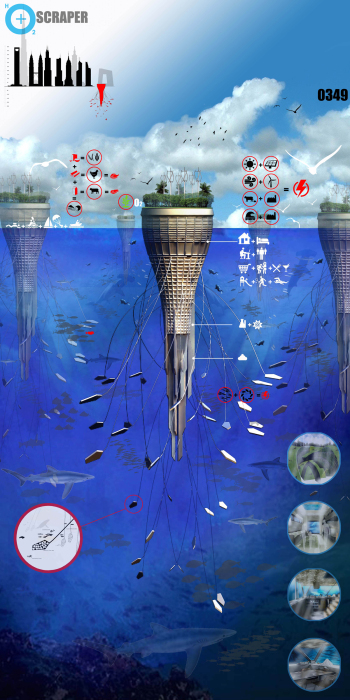
Malezyalı mimar Sarly Adre bin Sarkum’un tasarladığı ancak henüz hayata geçirilmeyen yapı suyun içinde yüzen bir nilüfer gibi gözüküyor. Yalnızca bazı katların suyun üzerinde olduğu binada geri kalan herşey suyun altında yer alıyor. Suda dikey olarak duran binanın desteğini uzun sarmaşıklara benzeyen yapılar sağlıyor. Kendi elektrik ve gıda ihtiyacını karşılayan çevredostu yapıda yalnızca rüzgar, güneş ve dalga enerjisi kullanılacak.

Binanın dengesini sağlayan uzantılar aynı zamanda kinetik enerji sayesinde enerji de üretecek. Sarkum, tasarımını 5 yıldır geleceğin gökdelen projeleri için özel bir yarışma düzenleyen eVolo mimarlık dergisi için tanıttı. Binanın binlerce kişiye ev ve işyeri sağlayabileceği tahmin ediliyor. Bir zamanlar dünyanın en yüksek binası olan New York’taki Empire State binası kadar yani 381 metre yüksekliğinde olabileceği hesaplanıyor.

Sarkum’un tasarımını hayata geçirmek şimdilik uzak bir olasılık gibi görünüyor ancak birçok uzman küresel ısınmanın gelecekte insanlığı bu şekilde yaşamaya zorlayabileceğini öne sürüyor.

3. Okyanus Kentleri, Arup Biomimetics

40 yıl sonra, dünyanın geri kalanı gibi Avustralya da büyük ihtimalle şimdikinden oldukça farklı görünecek. Hatta belki de Arup Biomimetics’in hazırladığı “Okyanus Kenti” konseptinde olduğu gibi muhtemelen su altında olacak…

Voynich elyazması

Voynich elyazması, bilinmeyen bir yazıyla yazılmış, anlamı çözülemeyen gizemli bir kitap.

Tüm kitap okumak icin: http://archive.org/details/TheVoynichManuscript

1450 ila 1520 yıllarında yazıldığı tahmin edilmektedir.Kitap 15 cm.’ye 22,5 cm. ölçülerinde ve 240 sayfadır ancak tamamının 270 sayfa olduğu düşünülmektedir. Kitaba ismini veren, 1912 yılında varlığını ortaya çıkaran Wilfrid M. Voynich adındaki sahaftır. Yapılan bilimsel incelemeler, kitabın Voynich tarafından yapılmış bir sahtekârlık olmadığını kanıtlamıştır.

Kitap çok sayıda ilginç resim içerir. Bunlardan bir kısmı yıldızları, bitkileri ve tuhaf bir tesisatla birbirine bağlı küvetlerde yıkanan çıplak kadınları gösterir. Resimlere bakılarak kitabın belli konularda (astroloji, bitkibilim, vs.) bölümlerden oluştuğu tahmin edilmektdir.

Kitabı Roger Bacon, John Dee ve Edward Kelly dahil çeşitli kişilerin yazdığı öne sürülse de bu iddiaların hiçbiri kanıtlanamamıştır.

Voynich elyazması yıllardır dilbilimciler, kriptologlar, tarihçiler, diğer branşlardan bilimadamları ve meraklılar tarafından yoğun olarak incelenmekle birlikte, çözüldüğüne dair hiçbir kanıt bulunmamaktadır. İstatistiksel ve dilbilimsel çözümlemeler, metnin rasgele yazılmış anlamsız bir işaret yığını değil, doğal bir dilin yazıya geçirilmiş hali olduğunu göstermektedir. Ancak bunun hangi dil olduğu bilinmemektedir.

Text

The text was clearly written from left to right, with a slightly ragged right margin. Longer sections are broken into paragraphs, sometimes with star- or flower-like “bullets” in the left margin. There is no obvious punctuation, and no indications of any errors or corrections made at any place in the document. The ductus flows smoothly, giving the impression that the symbols were not enciphered, as there is no delay between characters as would normally be expected in written encoded text. Whoever the scribe was, he or she was practiced in writing the script. However, such writing fluency could also be achieved by copying prepared coded text from some other source, such as a wax tablet or separate manuscript.

The text consists of over 170,000 discrete glyphs, usually separated from each other by narrow gaps. Most of the glyphs are written with one or two simple pen strokes. While there is some dispute as to whether certain glyphs are distinct or not, an alphabet with 20–30 glyphs would account for virtually all of the text; the exceptions are a few dozen rarer characters that occur only once or twice each. Various transcription alphabets have been created, to equate the Voynich glyphs with Latin characters in order to help with cryptanalysis, such as the European Voynich Alphabet. The first major one was created by cryptographer William F. Friedman in the 1940s, where each line of the manuscript was transcribed to an IBM punch card to make it machine-readable.

Wider gaps divide the text into about 35,000 “words” of varying length. These seem to follow phonological or orthographic laws of some sort, e.g., certain characters must appear in each word (like English vowels), some characters never follow others, some may be doubled or tripled but others may not, etc.

Statistical analysis of the text reveals patterns similar to those of natural languages. For instance, the word entropy (about 10 bits per word) is similar to that of English or Latin texts. Some words occur only in certain sections, or in only a few pages; others occur throughout the manuscript. There are very few repetitions among the thousand or so “labels” attached to the illustrations. In the herbal section, the first word on each page occurs only on that page and may possibly be the name of the plant.

On the other hand, the Voynich manuscript’s “language” is quite unlike European languages in several aspects. There are practically no words comprising more than ten glyphs, yet there are also few one- or two-letter words. The distribution of letters within words is also rather peculiar: some characters occur only at the beginning of a word, some only at the end, and some always in the middle section. While Semitic alphabets have many letters that are written differently depending on whether they occur at the beginning, in the middle or at the end of a word, letters of the Latin, Cyrillic, and Greek alphabets are generally written the same way regardless of their position within a word (with the Greek letter sigma and the obsolete long s being notable exceptions).

The text seems to be more repetitive than typical European languages; there are instances where the same common word appears up to three times in a row. Words that differ by only one letter also repeat with unusual frequency, causing single-substitution alphabet decipherings to yield babble-like text. Elizebeth Friedman in 1962 described such attempts as “doomed to utter frustration”.

There are only a few words in the manuscript written in a seemingly Latin script. On the last page, there are four lines of writing written in rather distorted Latin letters, except for two words in the main script. The lettering resembles European alphabets of the late 14th and 15th centuries, but the words do not seem to make sense in any language. Also, a series of diagrams in the “astronomical” section has the names of ten of the months (from March to December) written in Latin script, with spelling suggestive of the medieval languages of France, northwest Italy or the Iberian Peninsula. However, it is not known whether these bits of Latin script were part of the original text or were added later.

Illustrations

The illustrations of the manuscript shed little light on the precise nature of its text but imply that the book consists of six “sections”, with different styles and subject matter. Except for the last section, which contains only text, almost every page contains at least one illustration. Following are the sections and their conventional names:

Herbal

Each page displays one plant (sometimes two) and a few paragraphs of text—a format typical of European herbals of the time. Some parts of these drawings are larger and cleaner copies of sketches seen in the "pharmaceutical" section. None of the plants depicted are unambiguously identifiable.

Astronomical

Contains circular diagrams, some of them with suns, moons, and stars, suggestive of astronomy or astrology. One series of 12 diagrams depicts conventional symbols for the zodiacal constellations (two fish for Pisces, a bull for Taurus, a hunter with crossbow for Sagittarius, etc.). Each of these has 30 female figures arranged in two or more concentric bands. Most of the females are at least partly naked, and each holds what appears to be a labeled star or is shown with the star attached by what could be a tether or cord of some kind to either arm. The last two pages of this section (Aquarius and Capricornus, roughly January and February) were lost, while Aries and Taurus are split into four paired diagrams with 15 women and 15 stars each. Some of these diagrams are on fold-out pages.

Biological

A dense continuous text interspersed with figures, mostly showing small naked women, some wearing crowns, bathing in pools or tubs connected by an elaborate network of pipes, some of them strongly reminiscent of body organs.

Cosmological

More circular diagrams, but of an obscure nature. This section also has foldouts; one of them spans six pages and contains a map or diagram, with nine "islands" or "rosettes" connected by "causeways" and containing castles, as well as what may possibly be a volcano.


Pharmaceutical

Many labeled drawings of isolated plant parts (roots, leaves, etc.); objects resembling apothecary jars, ranging in style from the mundane to the fantastical; and a few text paragraphs.

Recipes

Many short paragraphs, each marked with a flower- or star-like "bullet".

Purpose

The overall impression given by the surviving leaves of the manuscript is that it was meant to serve as a pharmacopoeia or to address topics in medieval or early modern medicine. However, the puzzling details of illustrations have fueled many theories about the book’s origins, the contents of its text, and the purpose for which it was intended.

The first section of the book is almost certainly herbal, but attempts to identify the plants, either with actual specimens or with the stylized drawings of contemporary herbals, have largely failed. Few of the plant drawings (such as a wild pansy and the maidenhair fern) can be identified with reasonable certainty. Those herbal pictures that match pharmacological sketches appear to be clean copies of these, except that missing parts were completed with improbable-looking details. In fact, many of the plant drawings in the herbal section seem to be composite: the roots of one species have been fastened to the leaves of another, with flowers from a third.

Brumbaugh believed that one illustration depicted a New World sunflower, which would help date the manuscript and open up intriguing possibilities for its origin. However, the resemblance is slight, especially when compared to the original wild species; and, since the scale of the drawing is not known, the plant could be many other members of the same family, which includes the common daisy, chamomile, and many other species from all over the world.

The basins and tubes in the “biological” section are sometimes interpreted as implying a connection to alchemy, yet bear little obvious resemblance to the alchemical equipment of the period.

Astrological considerations frequently played a prominent role in herb gathering, bloodletting and other medical procedures common during the likeliest dates of the manuscript. However, apart from the obvious Zodiac symbols, and one diagram possibly showing the classical planets, no one has been able to interpret the illustrations within known astrological traditions (European or otherwise).

A circular drawing in the “astronomical” section depicts an irregularly shaped object with four curved arms, which, in 1928, antiquarian William Romaine Newbold interpreted as a picture of a galaxy, which could only be obtained with a telescope. Similarly, he interpreted other drawings as cells seen through a microscope. However, Newbold’s analysis has since been dismissed as overly speculative.

I find this very exciting, to read more: http://en.wikipedia.org/wiki/Voynich_manuscript

Altıncı His Teknolojisi nedir?

Pranav Mistry, TED Hindistanda fiziksel dünya ile veri dünyasının etkileşimine yardımcı olacak çeşitli araçları gösteriyor – kendisinin AltıncıHis cihazı ve yeni, devrimsel kağıt “dizüstü” de buna dahil. Sahnedeki soru-cevap kısmında ise Mistry tüm imkanlara yol vermek için AltıncıHis’in yazılımını açık kaynak olarak sunacağını söylüyor.

Teknoloji dünyasını derinden sarsacak yeni bir sistem ; Pranav Mistry is the inventor of SixthSense, a wearable device that enables new interactions between the real world and the world of data. Altıncı His Teknolojisi.

Pattie Maes’in MIT’deki laboratuarında Pranav Mistry önderliğinde geliştirilen bu teknoloji TED’in en heyecan verici olayıydı. Üzerinize giyilebilen ve çevrenizle çok derin bir etkileşim kurmanın yolunu açacak projektörlü bir cihaz bu. “Azınlık Raporu” filmini düşünün, sonra biraz daha ilerisini hayal edin.

Pattie Maes çığır açan giyilebilir teknoloji “Altıncı His”si tanıtıyor

burda kurma klavuzu: http://code.google.com/p/sixthsense/w/list

The Sixth sense mobile computing device you see in the image on top is installed with software that analyzes the gestures and the objects captured by the camera so that it can respond and provide the appropriate information. For example, Mistry traces a small circle on his wrist using his index finger, SixthSense will project a watch onto his wrist:

There are many more gestures that the device recognizes – drawing a magnifying glass projects a map application, while drawing the ‘@’ symbol lets the user check his/her email. SixthSense can also interact with everyday objects, like in the image below where it reveals that the flight which the user has a ticket to is delayed.

Sixth sense can pull out the videos related to the latest news you are currently reading on the newspaper:

Amelia Earhart kimdir?

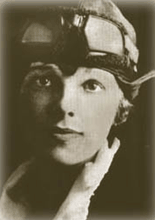
Amelia Earhart 24 Temmuz 1897′ de Kansas, Atchison’ da doğdu. Harika bir kadin, bugün onun icin bu forum.

Amelia Earhart, dünyanın en ünlü pilotlarından biridir. Kısa yaşamı süresince yeni ufukların haritasını çizdi ve rekorlar kırdı. Dünyanın etrafında yaptığı bir uçuş sırasında kayboldu.

Earhart 24 Temmuz 1897′ de Kansas, Atchison’ da doğdu. Büyük olan Edwin Stanton ve Amy Otis Earhart iki kız kardeştiler. Bu iki zeki kızın çocuklukları oldukça mutsuz geçti. Babaları sık sık işini kaybeden bir alkolikti. Kızlar gündelik işlerini yaparken sık sık şiir okur, aynı zamanda basket ve tenis gibi sporları da severlerdi. Aileleri onları yeni şeyler denemeleri konusunda yüreklendiriyordu.

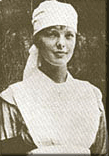
Amelia liseden sonra yüksekokula gitmeyi düşündü. Fakat, 1.Dünya Savaşı’nda gazi olan birkaç kişiyle tanıştıktan sonra bunun yerine hemşirelik eğitimi almaya karar verdi.

Savaş sırasında Amelia Kanada’ da askeri hemşire olarak çalıştı ve sonra gönüllü olarak göçmen çocuklara İngilizce öğretti. İşin yanında, Amelia’nın bir hobisi oldu. 1920’lerde popüler olan uçak gösterilerini seyretmekten zevk alıyordu. Bir gün 10 dakikalık uçak gezisi yaptı ve uçmaya yetenekli olduğunu ve uçmayı öğrenebileceğini anladı. Amelia bir sürü değişik işte çalıştı ve annesinin yardımıyla 1000 $ biriktirdi. O günlerde 1000 $ oldukça yüksek bir rakamdı. 10 saatlik öğretim ve birçok çarpışmadan sonra Amelia uçmaya hazırdı. İlk yalnız uçuşunu 1921′ de yaptı. Uçuş çok iyi geçti. Sonraki yıl, Amelia yeterli parayı biriktirdi ve kendi uçağını satın aldı.

1928’ye dek sadece hobi olarak uçtu. Bu durum Amelia’nın Yüzbaşı Hilton H Railey’ den bir çağrı almasına dek sürdü. Amelia’ye, Wilmer Stultz ve Louis Gordon adlı pilotlara Birleşik Devletler’den İngiltere’ ye uçuşlarında eşlik etmesini teklif etti. Amelia sadece bir yolcu olacağını düşünürken, Atlantiği geçen ilk kadın pilot oldu. Uçuş “dostluk” adına oldu ve bu gezi 17-18 Haziran 1928′ de gerçekleşti. Amelia uçuş hakkında bir makale yazan George Putnam ile evlendi.

Bundan sonra Amelia halkın dikkatini çekti.1932′ de tek başına Atlantiği geçti ve 13 saat 30 dakika ile yeni bir Atlantik geçiş rekoru kırdı.Bu nedenle Amerika başkanı Herbert Hoover’ dan bir madalya aldı. Birkaç yıl sonra zor bir rota olan Kaliforniya’ dan Hawai’ ye uçan ilk kadın pilot oldu.

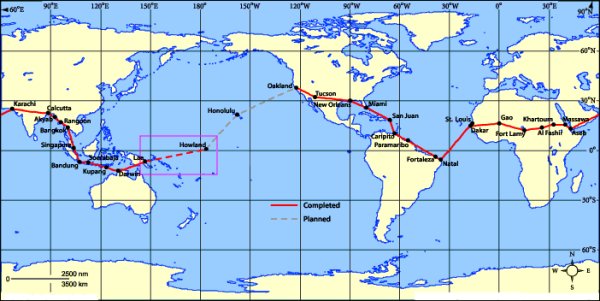
Amelia’nın son uçuşu 1937 Haziran ayında oldu. O ve dümencisi Fred Noonan dünya turu için hazırlandılar. İki motorlu Lockheed Electra ile uçuyorlardı. Maeria’ nın Miami şehrinden Güney Amerika’ya yol aldılar. Sonra Güney Atlantik Okyanus’ unu geçerek Afrika’nın Dakar şehrine gittiler. Oradan Tayland ve Avustralya’ya.

Bununla birlikte Yeni Gine’deki Lae’ den Howland adasına doğru giderken Amerikan Sahil Güvenliği uçakla iletişimi kaybetti. Son mesajı 2 Temmuz 1937, sabah saat 8.45 de aldılar. Amelia’nın ses tonu çok telaşlı olarak tanımlandı.

Büyük bir aramaya rağmen Amerikan Deniz Kuvvetleri ne pilotlara ne de uçağa ait bir ize rastlayamadı. Bu kayboluş hala esrarını korumaktadır. Bazıları onun ve Nooan’ ın Japonlar tarafından kaçırılıp idam edildiğine inanırken, diğerleri Amelia’nın başkan Roosevelt tarafından gizli bir casusluk görevine yolladığını sanmaktadırlar. Bununla beraber bu teorilerin hiç biri doğrulanmamıştır.

Ona karşı bir övgü olarak kocası 1939′ da “Yükseklerde Uçan Kanatlar” ismiyle bir biyografisini yayınladı. Biyografi onun maceralı yaşamını tanımlıyordu.

Tetrachromat nedir?

Süper çözünürlüklü gören insanlara deniyor.

bu “süper insan”lar, normalde insanların gözlerinde bulunan 3 tip koni’ye ek olarak 4 tipi de bulundururlar.

bizdeki koni hücreleri 3 dalga boyunu ayırt edebiliyor. 3 ana renk diye geçiyor; kırmızı, yeşil ve mavi.
onların dördüncüsü bizim göremediğimiz yeni keşfedilmiş bir ana rengi değil de, var olan renkleri daha derinlikli görmelerini sağlıyor.
yani bizim kıpkırmızı göreceğimiz bir alanda, farklı bir renkte değil ama kırmızının tonlarıymış gibi bazı şekiller görebilirler.
yeni bir renk ya da ultraviyole ışınları görmüyorlar yanlış anlaşılmasın.

bu şanslı elemanlara süper insan diyorlarmış.

bu süperlikten ziyade mutasyonla oluşmuş bi anormallik aslında, şu ana kadar bu gen “bozukluğu” dolayısıyla kadınlar “süper” görürken, erkekler renk körü oluyor.
bu da iyi ve kötü mutasyon örneklerini göstermesi açısından güzel bir örnek oluyor.

yabancı bi profesör abimiz sitesine test koymuş, üç daire var, küçük dairelerden oluşmuş, 3 ayrı renkte, dairenin içinde herhangi bir harf(ya da simge vs.) görebiliyorsanız süpersiniz.

gözlerinin evrimleşmiş olabilecek kadar iyi olduğunu düşünen, geleceğin süper kahraman adayları buradan ekstra bilgi alıp kendilerinde böyle bir özellik olup olmadığını kontrol etmek için profesörün blog’una göz atabilirler;

http://www.blogadilla.com/2008/06/08/are-you-a-tetrachromat/

If you see in one field more than one colour – maybe you are a tetrachromat 😉

A woman has been found with superhuman sight that enables her to see 99million more colours than the average person.

It took 20 years of hunting, but a dedicated scientist has found her Holy Grail: A woman who can see 99 million more colours than the average human being.

While she can’t see through walls or turn her eyes into a heat ray, the unidentified woman is a ‘tetrachromat’, with the ability to see much greater colour depth than almost everyone else in the world.

Dr Gabriele Jordan, a researcher at the Institute of Neuroscience has spent the last 20 years on a mission to find someone with superhuman sight.

Vision is one of the most complicated of the senses, and how the eyes perceive colour is broken down by ocular cells called cones.

Most people have three types of cones, and are described as being ‘trichromatic’.
Individuals who are colour blind have only two types of cones, making them dichromatic.

Discover magazine reported that while Dr Jordan and her team found several tetrachromats, only one could pass her test, which included showing three coloured circles with a difference that no one but a true tetrachromat could detect.

Running colours: Vision is one of the most complicated of the senses, and how the eyes perceive colour is broken down by ocular cells called cones

That woman, who has only been identified as subject cDa29, is a doctor living in northern England – but others may be out there.

Dr Jordan told Discover that the findings had her ‘jumping up and down.’

But with their tetrachromat comes a conundrum: How is one woman’s vision so advanced when others with the same four cones were not?

She told the magazine: ‘We now know tetrachromacy exists. But we don’t know what allows someone to become functionally tetrachromatic, when most four-coned women aren’t.’

And why not men? Research on colour blindness dating back to 1948 found the condition appeared to run in families, but didn’t affect women.

Dutch scientist HL de Vries, who wrote the paper, suggested that females recognised colour differently, thanks to that fourth cone.

na was sagt uns das mal wieder über die Frauen? ;-))